Time attack is timed lap driving on a permanent race circuit. You go out on track, you drive as fast as you can, and your best lap time is your result. No wheel-to-wheel racing, no drafting, no contact. Just you, the car, and whatever the circuit is willing to give you that day.
What separates time attack from a regular track day is structure and intent. A track day is open lapping -- you're there to drive, learn, and enjoy the car. Time attack adds a clock, a class structure, and a competitive framework. Your lap time goes up against everyone else's, which changes how you approach every corner.
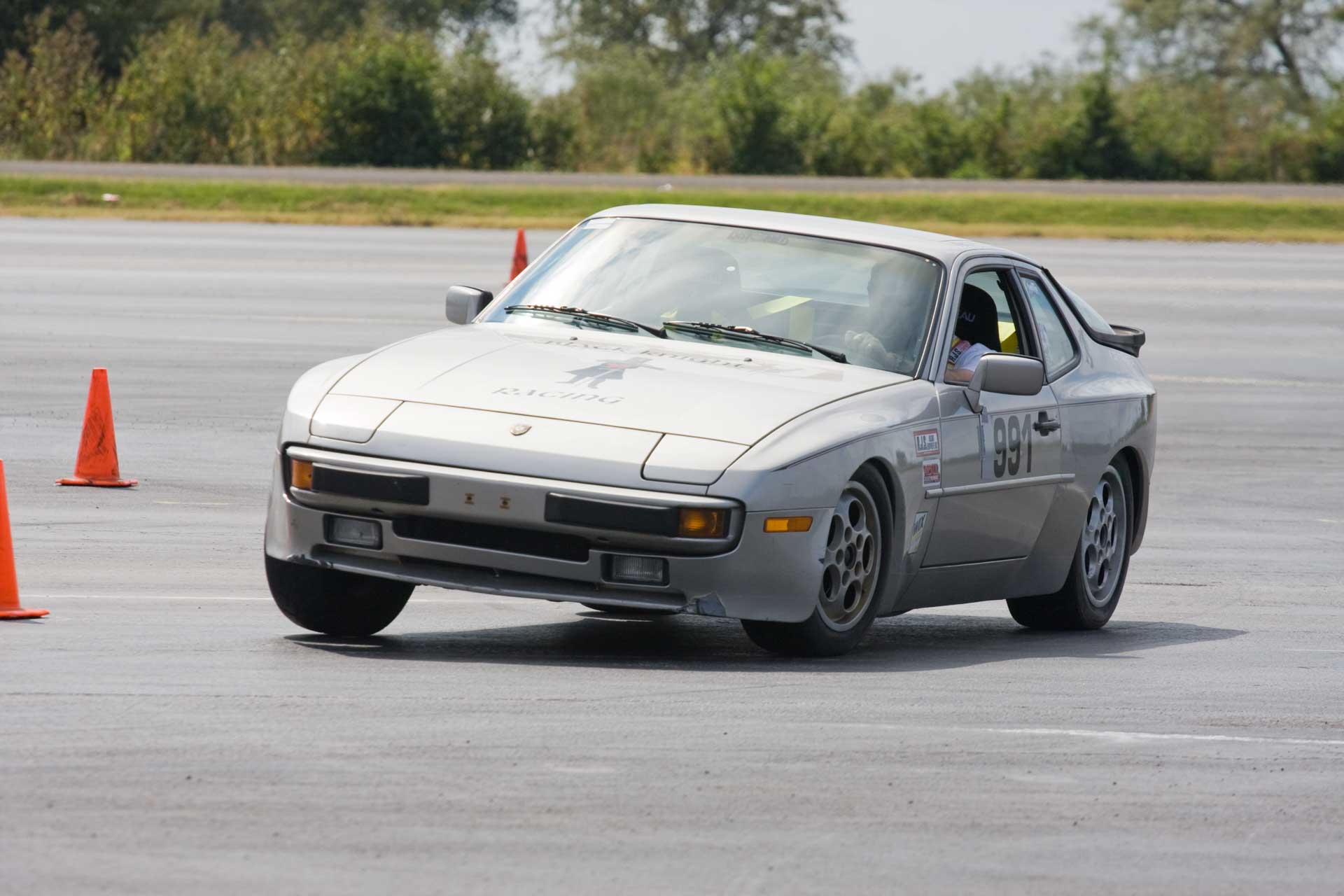
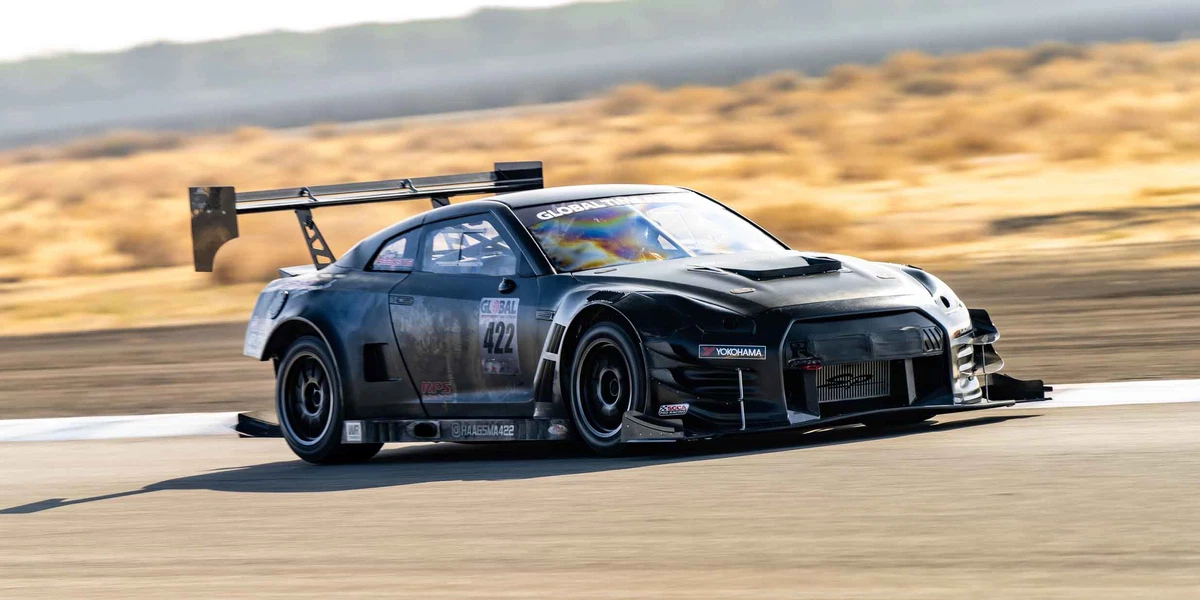
The spectrum of cars at a time attack event is wide enough to be disorienting the first time you see it. Street-legal hatchbacks share pit lane with purpose-built machines running full aero kits, sequential gearboxes, and slick tires.
The Track Requirement and Why It Matters
Time attack happens on permanent race circuits, and that single fact accounts for most of what makes it different from autocross or rallycross in terms of access, cost, and logistics.
A permanent circuit requires infrastructure: runoff areas, barriers, corner workers, medical staff, timing loops. None of that is cheap to build or maintain, and none of it exists in a parking lot on a Saturday morning. Autocross needs a flat surface and some cones, while time attack needs a track.
For most people, that means a drive. Options like Buttonwillow Raceway Park and Chuckwalla Valley Raceway are several hours from many locations. That's a weekend commitment before you've paid an entry fee or put fuel in the car.
By contrast, there's almost certainly an autocross or rallycross event within a reasonable distance, happening on a weekend morning, that you can enter in whatever you drove to work this week. The track requirement isn't a reason to avoid time attack, it's just an honest account of the barrier to entry, and why the lower-stakes disciplines exist and matter.
A Typical Event Day
You'll arrive in the morning for sign-on and technical inspection. Tech at a time attack event is more thorough than at an autocross; inspectors are checking helmet ratings, harnesses, fluid catch systems, and whether any modifications affect the car's structural integrity. First-timers in street cars usually get through without drama, but it's worth reading the specific requirements beforehand rather than finding out at the gate.
From there, the day runs in sessions. Depending on the event format, you might get four or five sessions of fifteen to twenty minutes each, with run groups organized by experience level or car class. You're not alone on track -- there will be other cars out -- but passing is typically controlled and contact isn't the point. Between sessions is when the real work happens: reviewing data if you have it, walking sections of the track on foot if you can, thinking through what the car did and why.
Your fastest lap from the day stands as your result. Some events run a championship across multiple rounds; others are standalone. Either way, the number you're chasing is your own previous best.
Your Car and What It Needs
Street cars are welcome at most time attack events, and entry-level classes are specifically designed for them. That said, the requirements are higher than autocross, and they should be -- the speeds are higher and the consequences of something going wrong are more significant.
At minimum, you'll need a Snell-rated helmet, usually SA2015 or newer. Brake fluid that can handle sustained high-temperature use is worth addressing before your first event rather than after. Brake pads too -- street pads fade quickly under track conditions, and fade at speed is not a gradual experience. Beyond that, requirements vary by class and organizer, but roll cage requirements typically only apply to the more heavily modified classes. A stock or lightly modified street car can usually compete with a helmet and good consumables.
The honest conversation about modifications is this: a street car will eventually become the limiting factor, and when it does, the cost of going faster increases significantly. Tires, suspension, brakes, power -- each step costs money, and the returns diminish as the baseline gets higher. Plenty of drivers spend years in street classes and never feel the need to go further. Others find themselves looking at roll cage quotes eighteen months in. Both outcomes are fine; just go in with eyes open.
How to Find an Event
Global Time Attack (GTA) is the largest dedicated time attack series in the United States, running events at tracks including Buttonwillow Raceway Park. If you want to see what the competitive end of the sport looks like -- and get a sense of the full spectrum from street cars to purpose-built machines -- a GTA event is worth attending even before you're ready to compete. Their schedule is at global-time-attack.com.
NASA Time Trial sits within the National Auto Sport Association (NASA)'s broader program alongside High Performance Driver Education (HPDE) events and wheel-to-wheel racing. The Time Trial format is explicitly positioned as a step up from HPDE, using the same car and same track in a more structured competitive context. NASA regions are active across the country; their schedule is at nasa-motorsports.com.
SCCA Time Trial runs under the Sports Car Club of America (SCCA)'s Solo and Road Racing programs. If you're already participating in SCCA autocross, Time Trial is a natural next step -- same organization, same membership, different venue. Details at scca.com.
BMW Car Club of America (BMW CCA) runs a Time Trials program explicitly positioned as a competitive step up from their HPDE events, using the same car and the same tech preparation. Details at bmwcca.org.
Porsche Club of America (PCA) runs Time Trial events alongside their Driver Education program at tracks across the country. PCA San Diego runs a Time Trial season with optional competitive timing at their DE events, which is a low-pressure way to get a first lap time without committing to full competition. Details at pca.org.
The Class Structure (Just Enough)
Time attack class structures vary by organization, but the general logic is consistent across most of them: cars are grouped by how modified they are, with street-legal cars in the lower classes and purpose-built machines at the top.
Global Time Attack uses Street, Street Plus, Built, and Race as their broad categories. NASA and SCCA have their own systems, and marque clubs like BMW CCA and PCA class cars within their own frameworks. The details matter when you're chasing a championship; for a first event, the practical question is just which class your car fits into, and the organizer's website will tell you.
What It Costs
Time attack is more expensive than autocross or rallycross, and it's worth being honest about that going in.
Entry fees for track events typically run $150-$300 per day, sometimes more for premium circuits or national-level events. NASA and SCCA memberships run around $100 annually and are generally required. Add fuel, tires -- which wear significantly faster at track pace than on the street -- brake pads, and brake fluid, and a weekend at the track adds up before you've touched the car.
The big cost variable is the car itself. A stock street car can compete in entry-level classes without modification, and many drivers spend years there. The moment you start chasing lap times seriously, the upgrade path is well-worn and expensive. Budget for consumables first; worry about modifications later.
Start Here First -- Autocross and Rallycross as an On-Ramp
Before the track, there's a strong argument for spending time in the parking lot.
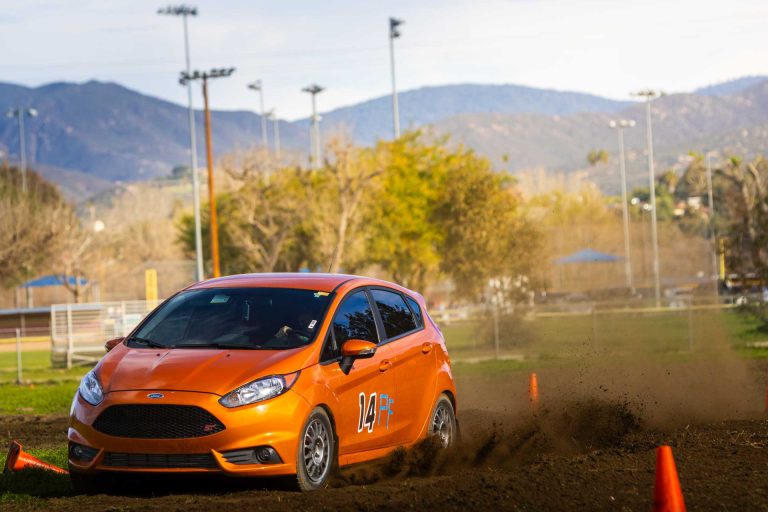
Autocross develops the same fundamental skills that time attack rewards -- car balance, corner entry, weight transfer, reading a course -- but at speeds low enough that the consequences of getting it wrong are measured in cone penalties rather than repair bills. The learning environment is more forgiving, the feedback loop is tighter, and the cost per session is a fraction of a track day. A slower car driven well will cover a lot of ground before you need a faster one.
Rallycross adds another dimension: throttle discipline, managing an unsettled car, understanding what the rear of the car is doing when grip is inconsistent. Different surface, same principle. Both are worth doing before you commit to the expense of regular track time, and both will make you measurably faster when you get there.
Where Time Attack Can Take You
For some drivers, time attack stays exactly what it is: a focused, honest way to measure improvement against a fixed reference. The lap time doesn't lie, and chasing it down over a season is its own reward.
For others it's a stepping stone. The car control and track craft that time attack develops translate directly into club racing -- Sports Car Club of America (SCCA) and NASA both run wheel-to-wheel programs, and the licensing pathway from Time Trial to Club Race is a recognized route within both organizations.